Loading ...
Go To Top

Blog Details

  • Home
  • Remote Work: Legal Framework, Best Practices, and the Contribution of People Analytics
Kara HR | Your Comprehensive HR Analytics Platform

Remote Work: Legal Framework, Best Practices, and the Contribution of People Analytics

14 May 2025

This article revisits trends, best practices, and the legal framework of remote work in Canada, with a focus on the growing role of People Analytics. By leveraging HR data, organizations can optimize remote work performance, better understand employee needs, and guide strategic decision-making in an evolving labor market.

The Evolution of Remote Work in Canada: Trends and Actionable Data

The Current Landscape of Remote Work

Since the pandemic, remote work has become embedded in organizational practices. While remote work was relatively uncommon before 2020, it suddenly became the norm for many organizations. Even five years later, many still offer remote work or have adopted hybrid work policies. This shift has generated significant volumes of HR data that can be leveraged to better understand employee performance, engagement, and turnover in remote settings.

What People Analytics Reveals:

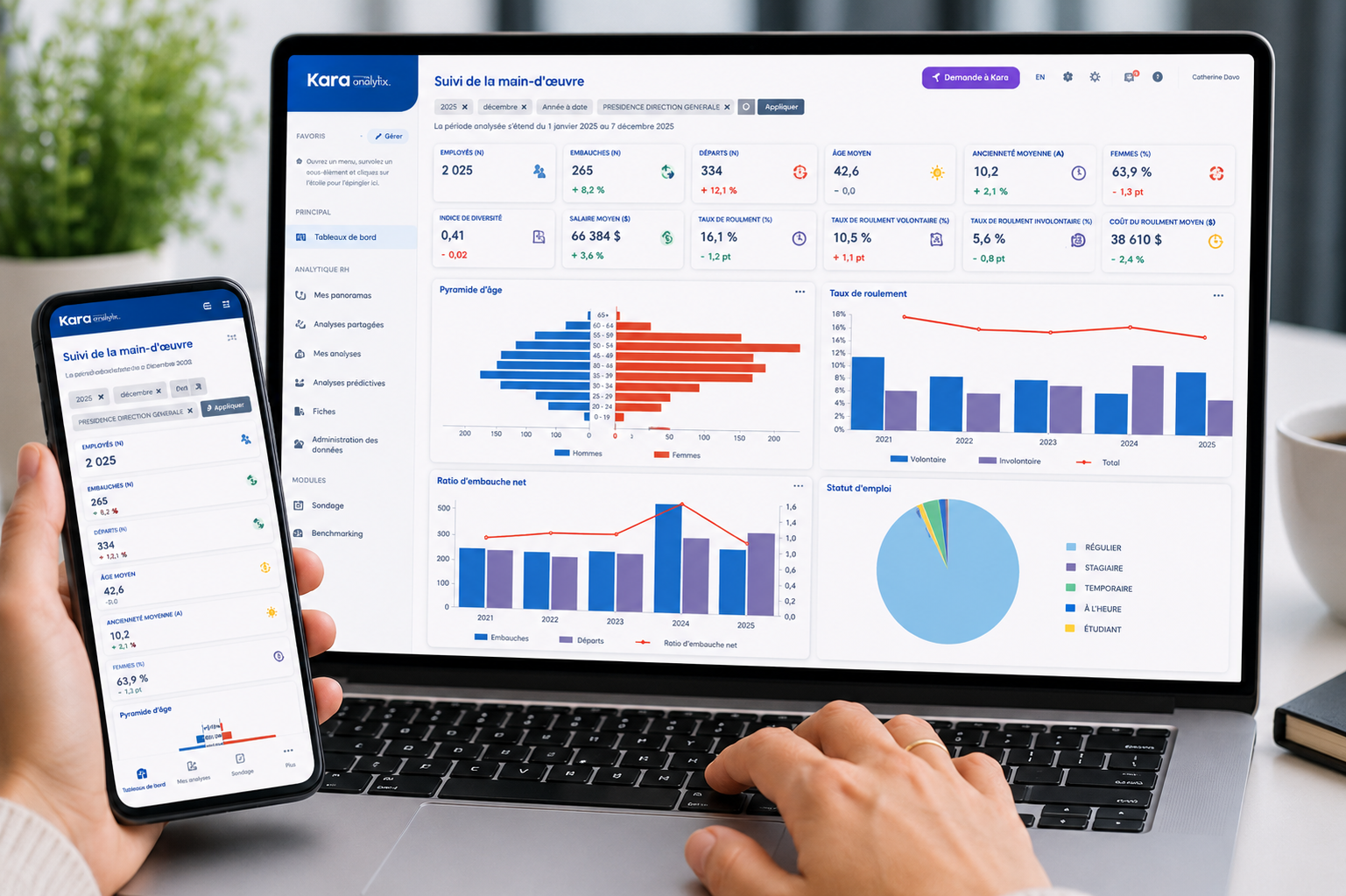
  • Cross-analysis of work modes and performance indicators helps identify the most effective hybrid models based on job roles.
  • HR dashboards allow managers to monitor the organizational climate in hybrid environments.

The Remote Worker Profile: A Data-Driven Perspective

Remote workers often come from professional and tech sectors. HR analytics not only provides insights into the typical profile of remote workers but also enables organizations to:

  • Assess job-person fit in hybrid models using historical performance data;
  • Measure resilience, autonomy, and engagement levels by department or team;
  • Detect early signs of disengagement or isolation through anonymized internal surveys and collaborative tool usage data.

Economic and Organizational Impact: Toward Data-Driven Management

The cost savings associated with remote work—reduced real estate expenses and decreased absenteeism—are well-documented. However, HR analytics allows these impacts to be precisely quantified and contextualized:

  • Trends in absenteeism by work mode;
  • Performance comparisons across remote, hybrid, and in-office teams;
  • Mapping of psychosocial risks based on remote management practices.

Additionally, analytics tools help anticipate long-term effects on company culture and employee retention.

The Future of Work: Hybrid Models, AI, and Augmented HR

Emerging technologies—such as collaborative AI and performance management platforms—are reshaping how teams work remotely. People Analytics is becoming an essential tool to:

  • Personalize the employee experience based on work mode preferences;
  • Adjust recognition and professional development practices in remote settings;
  • Enhance retention policies through predictive analytics.

Example: Some Canadian companies could use predictive models to anticipate the resignation of employees in prolonged remote setups by cross-referencing data like meeting attendance, response times, and engagement scores.


Legal Framework and People Analytics: A Complementary Pair

Remote work legislation relies on existing labor laws, including Quebec’s CNESST guidelines. Formal remote work agreements define responsibilities, but People Analytics can add value to this framework by:

  • Tracking reported incidents or ergonomic issues;
  • Analyzing mental health trends among remote workers via anonymous surveys or assistance requests;
  • Monitoring compliance with the right to disconnect through digital activity data.

Tax and Financial Considerations: Analytics as a Lever for Equity

People Analytics can support fairer reimbursement and allowance strategies by:

  • Identifying disparities between remote workers based on their place of residence;
  • Modeling various reimbursement or compensation scenarios based on actual resource usage;
  • Assessing the overall tax impact on the organization.

Best Practices and a Data-Driven Culture

Organizations that successfully embrace remote work often adopt a data-driven HR culture. This includes:

  • Performance indicators tailored to the selected work model;
  • Regular surveys on engagement and workload;
  • Targeted initiatives to maintain team cohesion, informed by data on organizational climate.

Data-Driven Best Practices Include:

  • Optimal frequency of in-person meetings for remote teams;
    Ideal screen time to avoid cognitive overload;
    Profiles of managers who succeed most in hybrid work environments.
  • Ideal screen time to avoid cognitive overload;
  • Profiles of managers who succeed most in hybrid work environments.

Conclusion: Leading Remote Work with People Analytics

Remote work is no longer just a work mode—it has become a strategic pillar for many organizations. By integrating People Analytics, organizations can:

  • Anticipate talent and organizational needs;
  • Enhance employee well-being and performance;
  • Strengthen their attractiveness and adaptability to market trends.

Next Step: Watch our webinars and discover how to turn your data into a driver of human performance.

Recent Post

Calendar

avril 2026
L M M J V S D
 12345
6789101112
13141516171819
20212223242526
27282930  

Show more our related blog

20 March 2026

HR analytics is no longer an emerging trend. It has

6 March 2026

Predictive HR analytics is exciting. But without reliable data and

4 February 2026

In 2026, the question is no longer what happened.The real

1 February 2026

This practical guide presents 25 key HR metrics, with their

19 November 2025

For far too long, the HR function has been perceived

5 November 2025

For a long time, Excel has been the go-to tool

27 October 2025

Organizations have invested — and continue to invest — heavily

27 October 2025

Talent and succession management are at the heart of modern

9 October 2025

Predictive analytics in Human Resources is generating a lot of

6 October 2025

People Analytics and predictive models open incredible possibilities — predicting