Blog Details
- Home
- Why establishing strong People analytics foundations is essential before moving to predictive analytics

Predictive HR analytics is exciting. But without reliable data and well-defined metrics, it amplifies errors instead of creating value. Before you predict, you need to master the basics.

HR analytics is evolving rapidly. More and more organizations want to integrate predictive analytics into their talent management strategy and be able to:
The potential is immense.
But one fundamental question remains: have you mastered the basics of People analytics well enough to move into predictive?
Predictive analytics in human resources works from historical data. Statistical models learn from past trends to estimate future probabilities.
In other words, the performance of a predictive model depends directly on the quality of the available HR data.
If the data is incomplete, inconsistent, poorly structured, or not standardized, predictions will be biased.
A weak foundation doesn’t become solid just because you add artificial intelligence to it.

1. Ensure HR data quality and governance
Data quality is the cornerstone of any HR analytics strategy. This involves:
Without data governance, predictive analytics relies on variable and fragile interpretations.
2. Master descriptive and diagnostic analytics
Before trying to predict employee turnover, you need to understand:
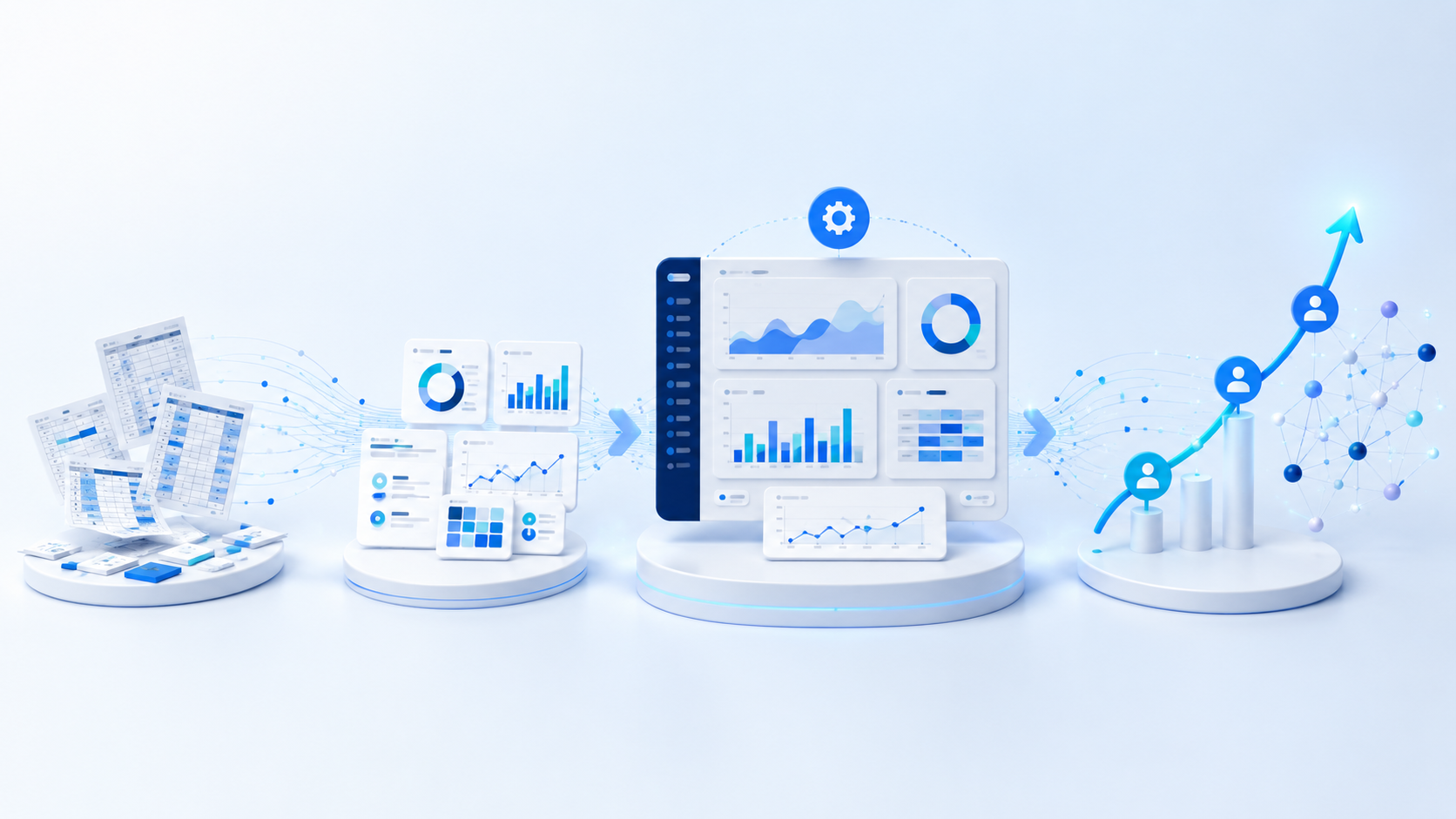
HR analytics follows a logical progression:
Each step is essential to reach the next. Jumping straight to predictive compromises your initiative.
3. Build a data culture in human resources
HR analytics maturity doesn’t depend only on technology tools.
It relies on:
Without a data culture, predictive analytics becomes an impressive tool… but one that’s rarely used.
4. Be able to interpret probabilities
A predictive model produces probabilities; these are not certainties.
A high risk of departure doesn’t mean an employee will necessarily leave the organization. It indicates a statistical trend.
Analytical maturity involves:
HR analytics requires as much strategic rigor as technical skills.

Implementing predictive analytics without solid foundations can lead to:
HR analytics should strengthen the HR department’s strategic credibility, not weaken it.
The most advanced companies in HR analytics didn’t start with artificial intelligence.
They first:
Predictive is a step in the journey, not a starting point.
At Kara Analytix, we see that the success of a predictive analytics project depends first on the strength of its foundations.
That’s why our approach prioritizes:
Before helping predict the future, we help organizations understand and master their current reality.
Because in HR analytics, sustainable performance doesn’t depend on tool sophistication — but on the strength of the foundations.
HR reporting rarely appears as a separate expense on an
Most organizations do not have an HR data problem. They
Not every organization approaches HR reporting the same way. Some
Manual HR reporting often costs more than organizations realize. The
HR reporting can be automated by connecting data from your
For many years, the HR Business Partner (HRBP) role was
You have an HR dashboard. But are you actually making
Digital transformation has become a top priority for organizations. Yet
Digital transformation has become a strategic priority for organizations of
Data has become an essential driver for HR teams. Yet
Where Does Your Organization Really Stand?
Compare your retention, turnover, absenteeism, and internal mobility metrics using the benchmarks from the 2026 HR Benchmarking Report.