Blog Details
- Home
- 8 signs it’s time to unify your HR Data


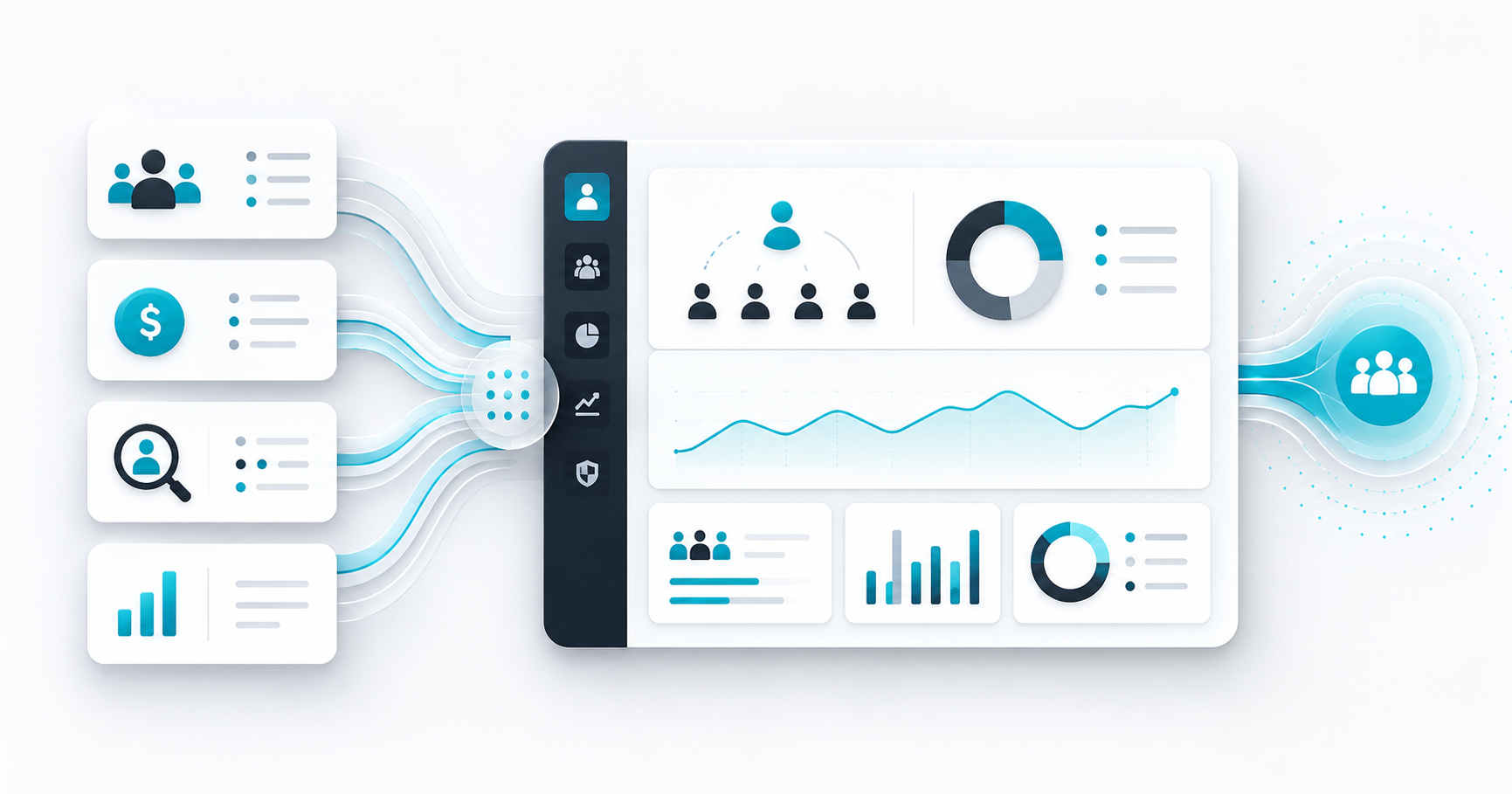
Data has become an essential driver for HR teams. Yet in many organizations, it remains scattered across multiple systems, spreadsheets, and tools. This fragmentation makes it difficult to produce reliable metrics, slows down analysis, and limits HR’s ability to support strategic decision-making.
But how do you know when the way your data is managed has become a barrier to performance?
In our previous blog, we discussed the importance of centralizing HR data into a single system. Here are eight signs that indicate it may be time to do just that.
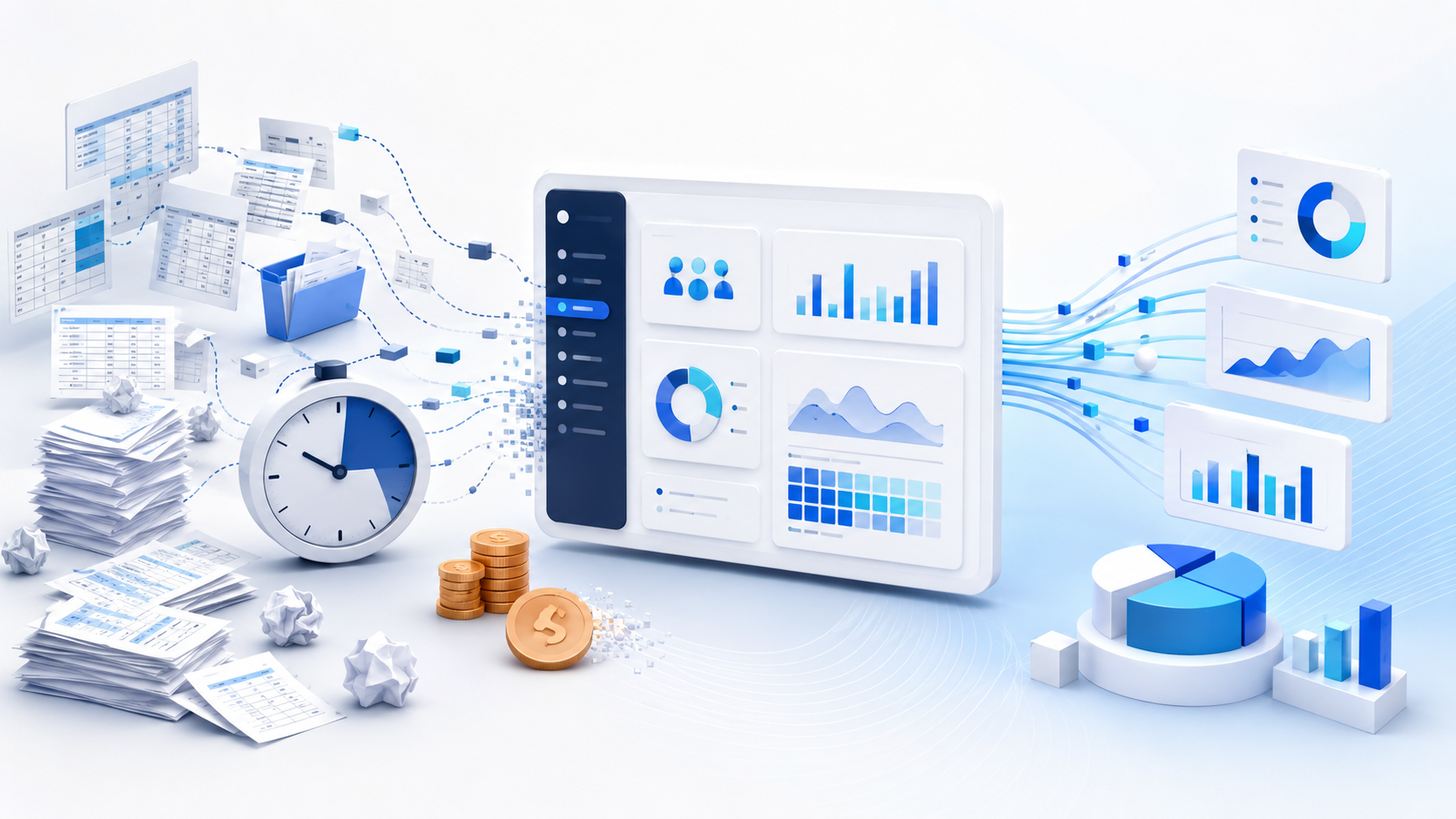
One of the most common warning signs is the amount of time dedicated to report preparation.
Every month, HR teams extract data from multiple systems, consolidate it in Excel, correct inconsistencies, and validate results before they can even begin analyzing them.
When most of your time is spent manipulating data rather than analyzing it, the value of people analytics is significantly reduced. The goal of data is not to produce spreadsheets—it is to generate insights that support better decision-making.
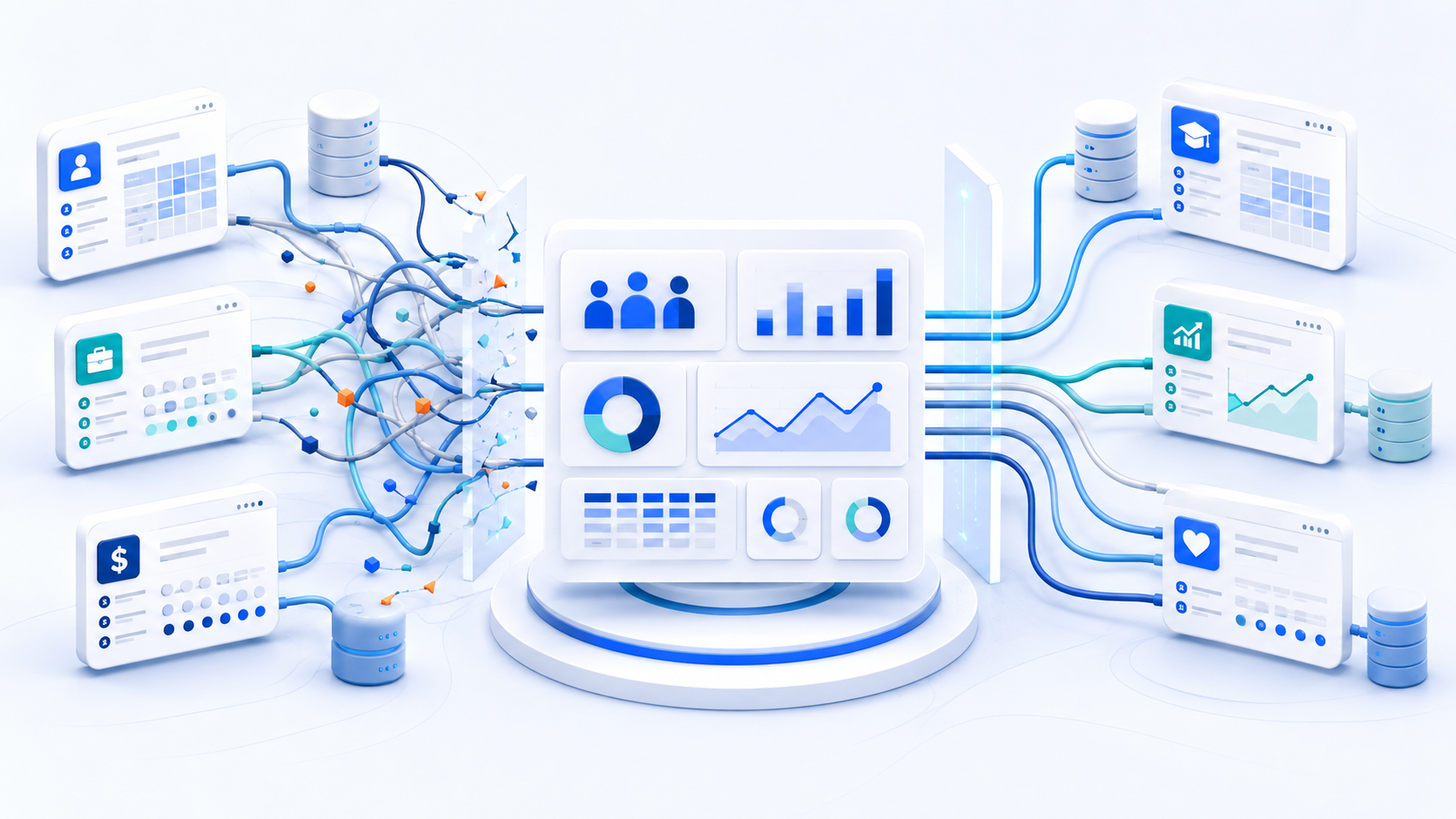
Most organizations today use several specialized tools: payroll systems, recruitment platforms, time and attendance software, learning management systems, performance management solutions, and employee engagement surveys.
Individually, these systems serve their purpose well. The challenge arises when you need a comprehensive view of your workforce by combining information across platforms.
If answering a single question requires consulting multiple systems, gaining a holistic understanding of your workforce becomes difficult.
A centralized data source brings these pieces together and makes them actionable within a single environment.

Have you ever noticed that two reports show different turnover rates for the same period? This situation is more common than many organizations realize.
When data comes from multiple sources, or when different people use their own calculation methods, metrics lose credibility. Managers end up questioning the numbers instead of using them to make decisions.
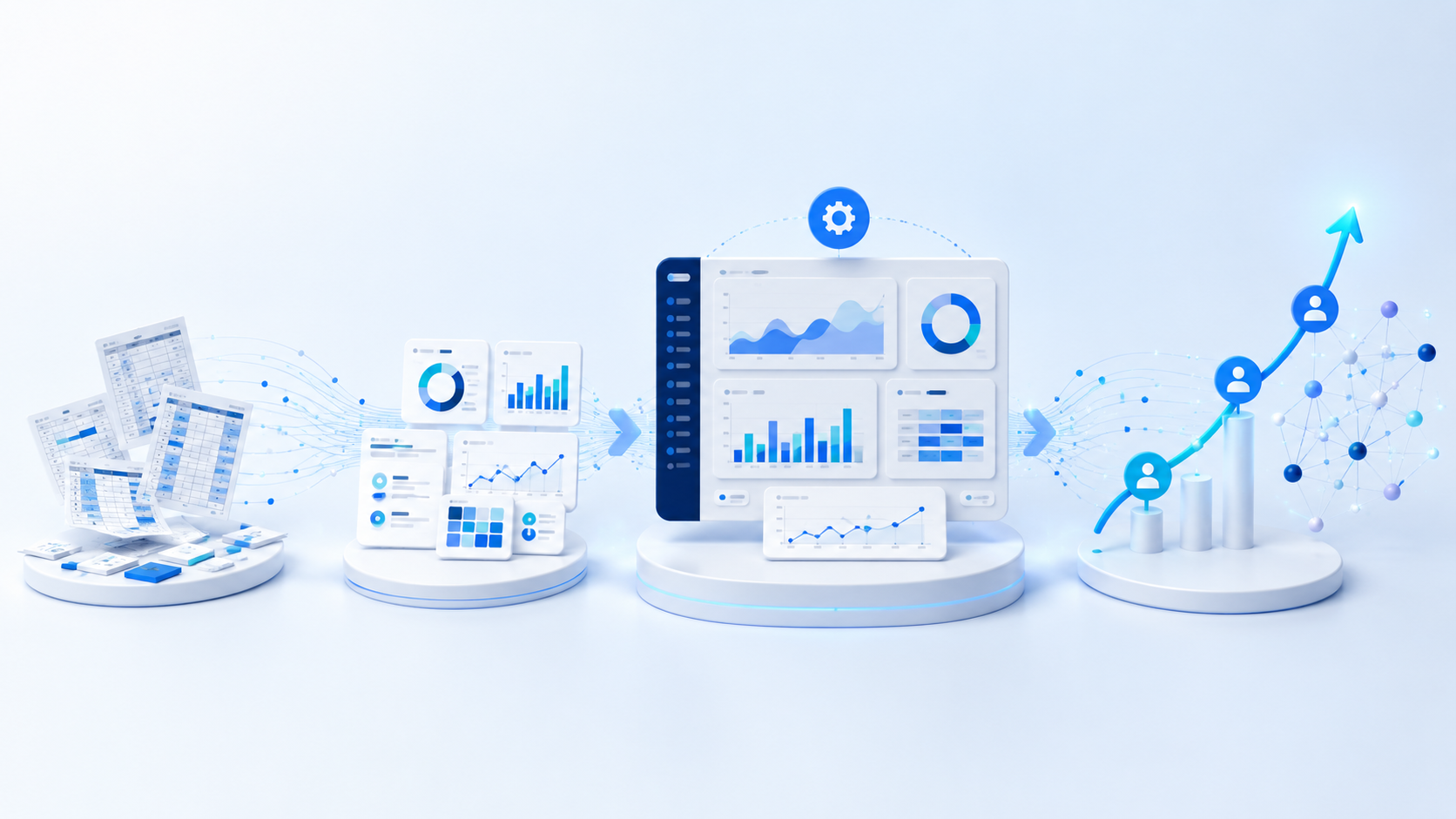
Unifying data allows organizations to establish consistent definitions and create a true single source of truth.
An executive requests a turnover analysis by department. A manager wants to understand absenteeism trends within their team. The executive committee asks for workforce growth insights.
These requests are perfectly legitimate, but responding quickly becomes difficult when data must be manually collected from multiple systems. If every new question requires several hours of work and lengthy turnaround times, your organization likely lacks the flexibility needed to leverage HR data effectively.
The most valuable HR analyses often emerge when multiple data sources are combined.
For example:
When data remains isolated across different systems, these analyses become complex—or even impossible—to conduct. If your reporting is primarily limited to descriptive statistics, your data structure may be a significant obstacle.

Many organizations want to implement advanced dashboards, predictive analytics, or even integrate artificial intelligence into their HR practices. However, all of these initiatives depend on one essential condition: reliable, consistent, and accessible data.
If your people analytics projects are continually delayed because of issues related to data quality, availability, or structure, it is likely that your technological foundation needs strengthening before you can move forward.
When data is difficult to access, HR teams often receive the same requests repeatedly:
How many employees do we have?
What is our turnover rate?
How many positions are currently vacant?
What is our absenteeism rate?
Instead of enabling self-service access to information, HR becomes the mandatory point of contact for every request.
A unified data infrastructure not only accelerates response times but also democratizes access to information for managers and decision-makers.
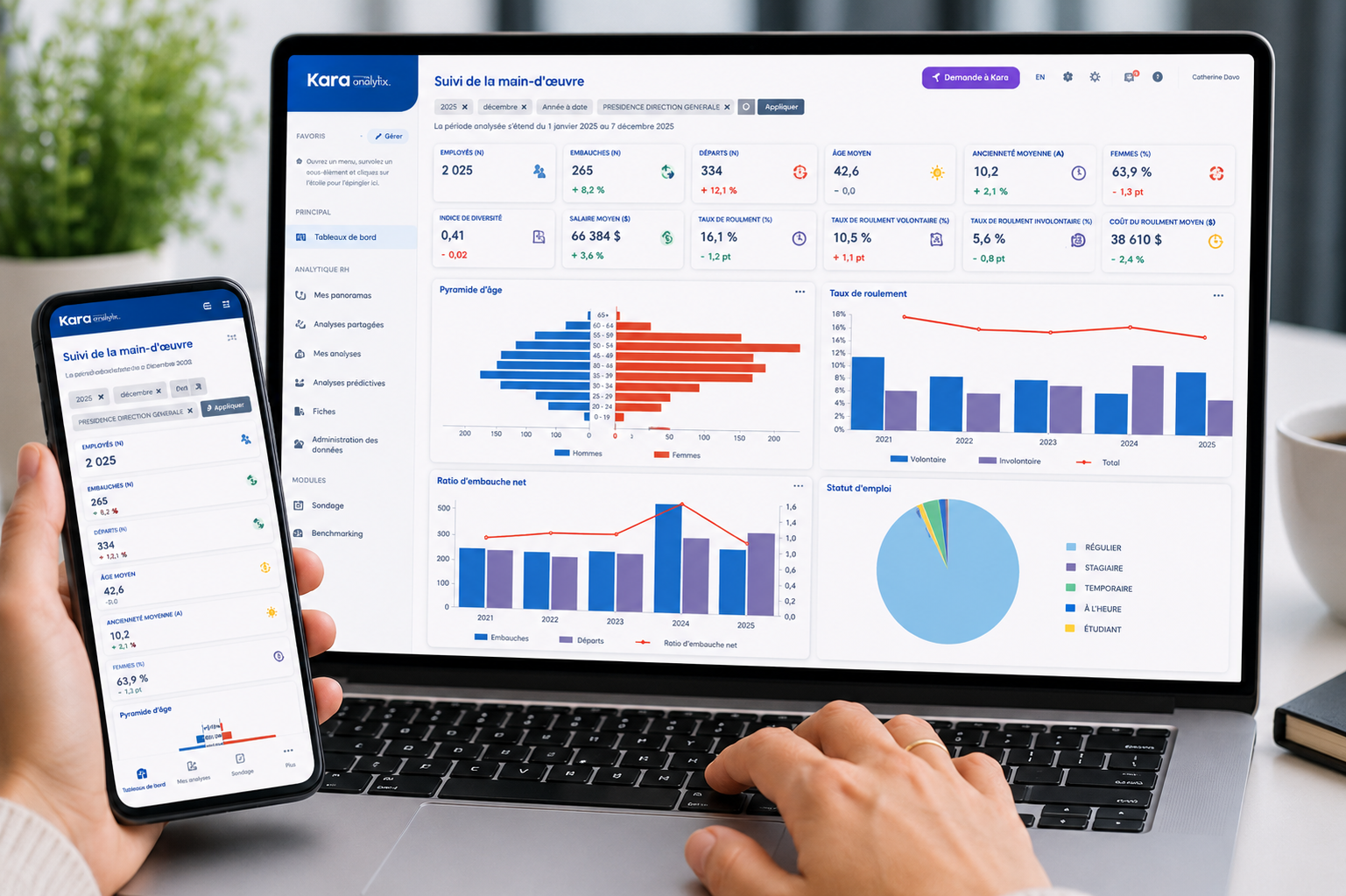
Many organizations have taken an important step by developing HR dashboards using tools such as Power BI. These initiatives typically improve visibility into key metrics and make information more accessible. However, behind those dashboards often lies a less visible reality: data maintenance. Each update requires data extraction from multiple systems. Calculation rules need adjustments. Changes to source systems can trigger manual corrections or technical modifications.
Over time, some organizations realize they have built excellent dashboards while remaining heavily dependent on manual processes to keep them running. The problem is usually not the visualization tool itself. Rather, it lies in the data architecture behind it. When HR data is centralized and harmonized within a single database, dashboards become easier to maintain, more reliable, and far more scalable. If your team still spends several hours each month feeding, updating, or validating dashboards despite using powerful analytics tools, it may be time to revisit the foundation of your HR data ecosystem.
Unifying HR data is not simply a technology project. It is a strategic enabler that allows HR teams to spend more time analyzing, interpreting, and creating value. If several of these signs sound familiar, it may be time to evaluate how your data is structured and leveraged. After all, the best decisions rarely come from having more data—they come from having better organized data.
HR reporting rarely appears as a separate expense on an
Most organizations do not have an HR data problem. They
Not every organization approaches HR reporting the same way. Some
Manual HR reporting often costs more than organizations realize. The
HR reporting can be automated by connecting data from your
For many years, the HR Business Partner (HRBP) role was
You have an HR dashboard. But are you actually making
Digital transformation has become a top priority for organizations. Yet
Digital transformation has become a strategic priority for organizations of
Data has become an essential driver for HR teams. Yet
Where Does Your Organization Really Stand?
Compare your retention, turnover, absenteeism, and internal mobility metrics using the benchmarks from the 2026 HR Benchmarking Report.